

Dario Zamorano
Therapist
(he/him/él)
Dario Zamorano, LCSW is a queer, Latinx, bilingual therapist whose work is grounded in relational depth, embodiment, and cultural awareness. Drawing from ACT, CBT, somatic work, and EFT, he supports clients navigating identity, masculinity, emotional expression, and the impact of systems on mental health. Dario is especially attentive to how lived experience, language, and the body hold what has often gone unnamed, and he offers a therapeutic space rooted in curiosity, softness, and shared humanity. His approach invites clients to move beyond survival strategies and toward more expansive, connected ways of being.
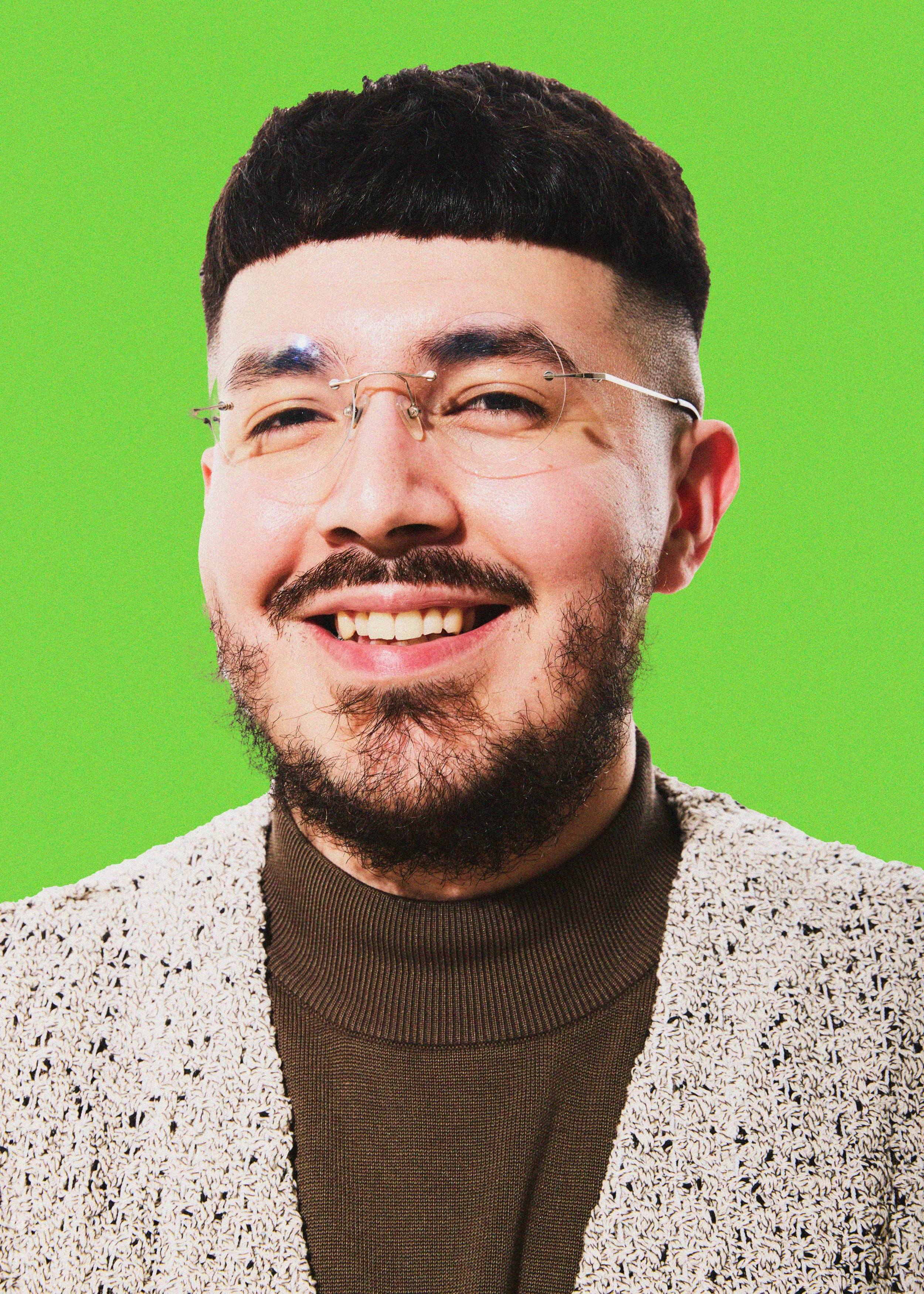
INTERVIEW BIO WITH Dario Zamorano
Tell us your journey as a male-identified person in becoming a therapist, and why the field of therapy for you.
As a therapist and a person who identifies as a cisgender man, I don’t think I grew up with the space to talk about what was going on inside my head or the language to put into words the feelings guiding my behaviors. I’ve seen that reflected in my family, in my classrooms and learning environments, and with the clients I’ve worked with—and continue to work with.
A lot of my day-to-day work, and part of becoming a therapist, is about holding that space, modeling, and also learning alongside clients who are exploring who they’re allowed to be, how they’re allowed to feel, and breaking apart what is expansive versus constrictive in how they navigate the world.
Identity, gender expression, and how those things touch our experiences with people and systems all shape how I show up. My aim is to move away from silence and the minimization of vulnerability, and to challenge folks to find language, connection, tenderness, and tether with others who might be on the same journey.
How do you incorporate these elements of culture into therapy? How is culture embodied for you as a clinician?
It starts with awareness and practicing embodying that awareness. As a queer, Latinx, bilingual, bicultural person, I often notice how my identities straddle two languages—sometimes speaking English, sometimes Spanish, and sometimes breaking them apart.
In training as a therapist, I thought these languages had to coexist in a way that was clear, clean, and complete—that if I spoke Spanish, it had to be fully Spanish and clinical. I noticed how much pressure I put on myself to get everything right in Spanish, and stepped back to ask whether I was doing the same thing when working with English-speaking clients.
As I spent more time working with Spanish-speaking clients, something became clear: whether someone speaks English or Spanish, the language of the DSM-5 isn’t designed to be accessible to people who aren’t trained in it. The common thread between both languages is that I don’t have to bring in clinical language unless it’s necessary, asked for, or relevant.
If people are curious, I don’t do a one-to-one translation. Instead, I’ll ask: How does this show up in your life? Does this mood interrupt your day-to-day? I use the same approach in Spanish.
I don’t like to come from a place where language feels inaccessible. People have their own ways of languaging their experiences, and I lean on that. The most accessible place to start is the body. People often know what they feel in their body before they can verbalize it, and that holds more wisdom than finding the most accurate clinical term to bridge understanding.
It’s human-to-human interaction—be real with what you’re feeling, and I’ll lean on that before forcing a label you might not even connect with. That’s not a threat—it’s an invitation. Let me in.
How do you work with clients through the feeling of being unsettled?
When I talk about metabolizing unsettledness, I work in levels. First, I explore how it shows up in the body—often before the language to name it has arrived. Maybe it’s in the chest, a restlessness, a looped thought. I slow down, intentionally name it, and stay with it before interrogating it.
Then I explore how it shows up in relationships. Once I know where it lives in the body, I get curious about how it moves through connections with others. Sometimes other people notice things I can’t see myself.
Finally, I consider what I want to make of it. Is it connected to how I want to live my life, show up for myself, my partner, my family, the kids I hope to have one day? Do I want to change it right away, or can I sit with it without rushing? This process gives me more ownership over how change unfolds.
How do you invite people into therapy? What does a therapy session with Dario look like?
The ingredients of my therapeutic space go beyond my degrees, license, credentials, and training in CBT, ACT, somatic work, and EFT—though those can be important entry points for clients seeking them. What truly shapes my work, and what I hope serves as genuine invitations into the process, are three things: therapy with me is an invitation to your own wonder, whimsy, and wisdom.
Wonder is leaning into curiosity—being willing to talk about mental health and to unlearn things that may feel unsafe to even think about.
Whimsy is breaking that zero-distance barrier between client and clinician. It doesn’t have to be suited and booted, with someone walking into a cold, sterile environment. It’s about leaning into joy and playfulness. Therapy already carries enough stigma and heaviness—there’s no need to add more.
Wisdom includes my training and education, but it also includes lived experience—mine and my clients’. I’ll ask: How do you live? How is that shaping your day-to-day? Is there anything that feels important to change or to keep the same? How different might things feel years from now, at the end of therapy?
Where does love exist for men right now?
Real, sustained, affirming love for men often exists in spaces that are hidden—it’s there, but not always named, visible, or safe. Right now, love for men tends to exist conditionally: when they are strong but not too emotional, when they provide but don’t need, when they sacrifice but don’t ask for care in return. It can feel transactional, tied to doing, achieving, and controlling.
But love also exists—slowly and sometimes painfully—in acts of softness. It expands when we embrace those acts of softness: crying, hugging, jewelry, the words we choose. It’s in the courage to stay with vulnerability without erasing or rejecting it.
What is your universal piece of advice?
Don’t confuse your survival strategies with who you are. The ways we shut down, people-please, numb out—these were learned and served a purpose in getting us through difficult moments. But they’re not the fullest truth of ourselves. We’re allowed to grow softer, braver, freer—and we’re still ourselves in every version of becoming.