
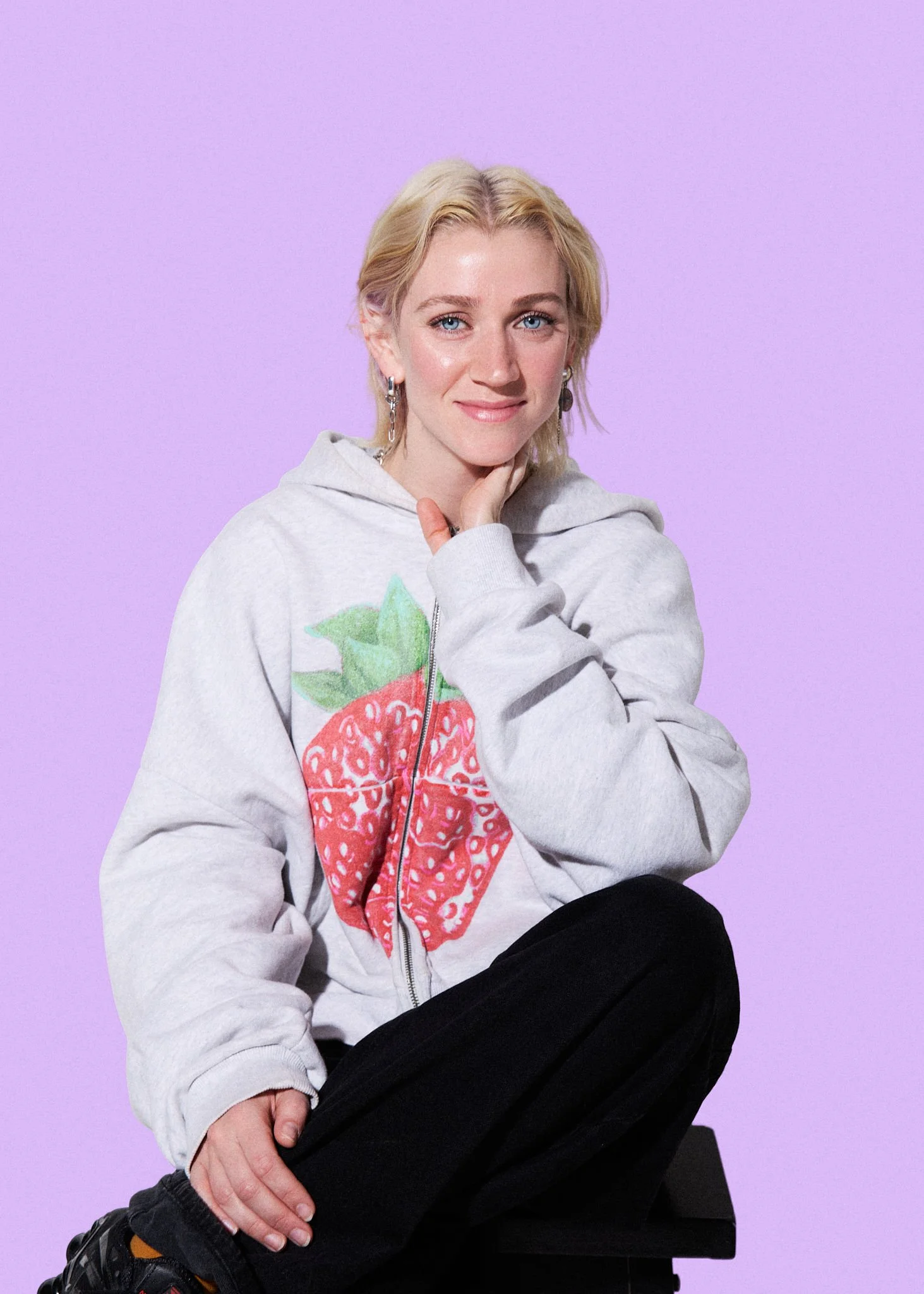
Julia Porter
Therapist
(they/she)
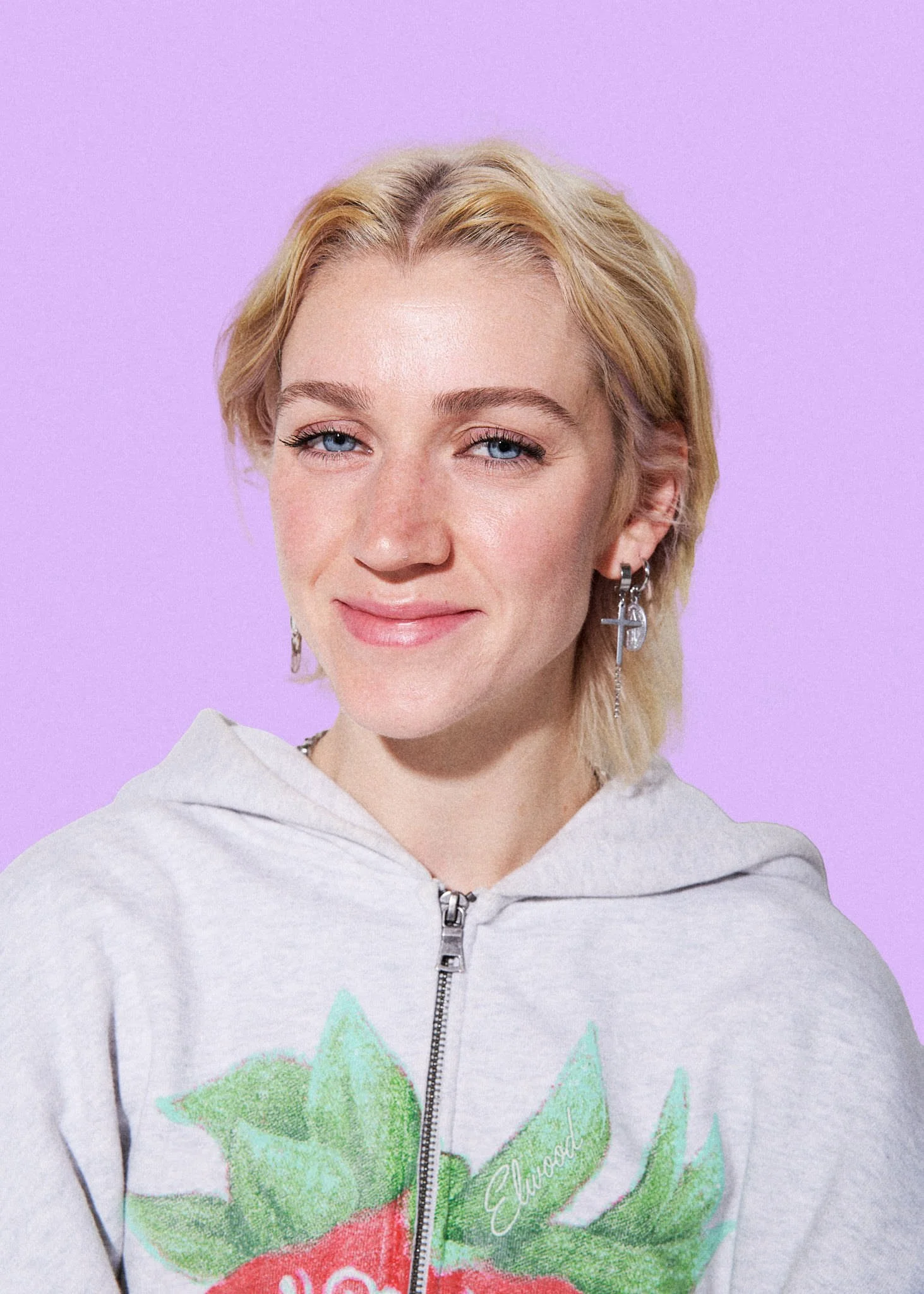
As a pre-licensed counselor practicing under clinical supervision, I believe therapy can be a helpful space to slow everything down— a place to feel your feelings, find connection, deepen your self-knowledge, and turn towards the parts of your experience that may feel too difficult or painful to navigate on your own.
I consider myself a holistic therapist. Part of this means that I integrate techniques and frameworks from mindfulness and contemplative practice, parts work, and somatic (body-based) practices with more traditional talk therapy to attend to the different corners of your life and experiences, mind-body-spirit. In more ~technical~ terms, my training is in Mindfulness-Based Transpersonal Counseling, Somatic Gestalt Therapy, Focusing, and Internal Family Systems. But beyond theory and technique, being a holistic therapist also means holding the realness of our sociopolitical climate, factors impacting the human collective, cultural context, intergenerational influences, and the infinite other ways in which our identities, lived experiences, and interconnectedness deeply impact how we relate to ourselves and the world around us.
It’s important to me that we co-create an authentic and anti-oppressive healing space where you feel safe and uplifted. I bring my curiosity, warmth, gentleness, humor and transparency to the process and always invite you to bring your full self too! Therapy is a consensual, collaborative and dynamic process, so we will go at your pace, focusing on the interventions that feel most supportive to you, and leaving the rest.
Knowing and understanding our past, our parts, our identities and how our bodies process can deeply impact our relationship with ourselves and others. I truly believe all humans are fundamentally whole, have inner wisdom, and are naturally wired towards healing and wellness if we can just provide the space, capacity and resources to let that wholeness flourish. It brings me great joy to help folks I work with connect to these qualities within themselves and find new ways to thrive. I am so glad you are here, taking this step for yourself, and it is with much warmth and humility that I say it would be an honor to explore with you on your healing path.
Some areas of my experience include, but aren’t limited to: anxiety, depression/mood, grief/loss, trauma work, relationship challenges, self compassion, LGBTQIA+ folx, ADHD/AuDHD, artists and creatives, and current and former sex workers.
I am a queer and non-binary, neurodivergent, born-and-raised Midwesterner. I completed my master's in Mindfulness-Based Transpersonal Counseling at Naropa University. When I am not working, I can be found taking plenty of walks, soaking up the bits of nature scattered throughout the city, working on DIY home projects, spending lots of playful time with my two sweet kitties, immersing myself in Chicago’s creative communities, and rewatching Hayao Miyazaki’s films.
Bio Interview with julia porter
Can you tell me a little bit about where YOur Connection with Art Began? And how it has grown into the relationship it is today?
Both of my parents are professional musicians, so music has always been a central connector in our family. I grew up taking piano, violin, and guitar lessons. My mom is a music teacher, piano teacher, and choir director. My dad is a folk artist and has been performing my whole life alongside other full-time work.
Music was just always there. It's a strong foundation in our family.
Finding dance has been so healing. It is a different way of connecting with music, but also mirrors being a musician in so many ways - my body just became my new instrument.
Dance gave me an experience of comfort in my body that I hadn't really had before, and I was drawn to that. What was interesting is that it opened up not just dance technique, but movement theory and ways of thinking about the body. I felt like I was immersed in a deep movement practice and theory very quickly through experimental classes, academic classes, improv classes, etc. I loved it. It was challenging to be a beginner all over again, but the permission to not know what I was doing and having so much learning to look forward to has kept me engaged, and been a massive catalyst for learning more about myself, my art and how I show up in community.
When you were on more of your dance and music path, did you imagine yourself becoming a therapist?
I felt pretty confident that therapy was the lane connected to my professional development, but I don't think I saw dance as something professionally accessible to me until the past couple of years here in Chicago. That's actually a really interesting thing I reflect on.
I had this sense that therapy was the thing for me. What that meant, what it would look like, or what the timeline would be, I had no idea. It took me a few years of applying to programs before I felt confident enough to commit. I knew I couldn't take on another academic experience unless there was genuine interest behind it.
As I've gotten older, I've come to understand how all of these things overlap. Somatic therapy has really been the through line. I joke sometimes about writing a book one day about the parallels between therapy, dance, and sex work because there are so many connections. It's been an interesting convergence.
You seem deeply drawn to challenge, but comfort also feels important to you. How do you understand the relationship between those two things?
At face value, comfort and challenge seem like they're at odds with each other. That's actually the fun part. The coexistence of the two. I don't think they're mutually exclusive. I think they're different domains, and challenge can exist in spaces where comfort exists too.
So much of therapy work, in its simplest form, is helping people learn that these things can coexist in an embodied way. Learning how to hold both. Learning how to be okay without disqualifying one in favor of the other.
I think that's the essence of what a lot of therapy is trying to get at. How do we engage with both without becoming attached to a particular outcome? Attachment to an outcome removes the uncertainty. It removes the grayness of the experience. It takes away our ability to simply let all of it be there.
A lot of people view Sex Work through a lens of objectification. How do you think about that assumption?
That's such an interesting question because it immediately raises another one. How are we defining objectification?
There is a common perception that sex workers are performing under systems of sexism and misogyny, and that the performance exists primarily for men. But I think there's another side to it. Honestly, I don't think there's anyone who has decentered men more than a sex worker. The performance exists, and the decentering exists at the same time.
What you're left with is a person who is incredibly comfortable with their sexuality. The performance isn't actually for the purpose of men. Instead, men are witnessing someone who is profoundly comfortable within their sexuality in a way that our society often doesn’t expect from queer and femme bodies.
I think there's an expectation that this work has the potential to be traumatic. People talk about the importance of boundaries and how difficult the work can be. And I agree with that. At the same time, the mirror that is held up in this work is the realization of how deeply AFAB people have been socialized to “perform” this exact role of femininity their whole lives. I think for a lot of genderqueer sex workers in particular, leaning into the performance of femininity can feel kind of like drag in a lot of ways. The performance is celebrated when it’s a default way of operating, but as soon as femme and queer folx in particular find autonomy in it and use it as a path for survival and financial gain, the performance is punished though stigma, laws and judgement.
What is your universal piece of advice?
It's less advice and more of an invitation. Not too tight, not too loose.
I find that it applies almost everywhere. It's a reflection on how we relate to ourselves, how we relate to other people, and how we relate to the world around us.