
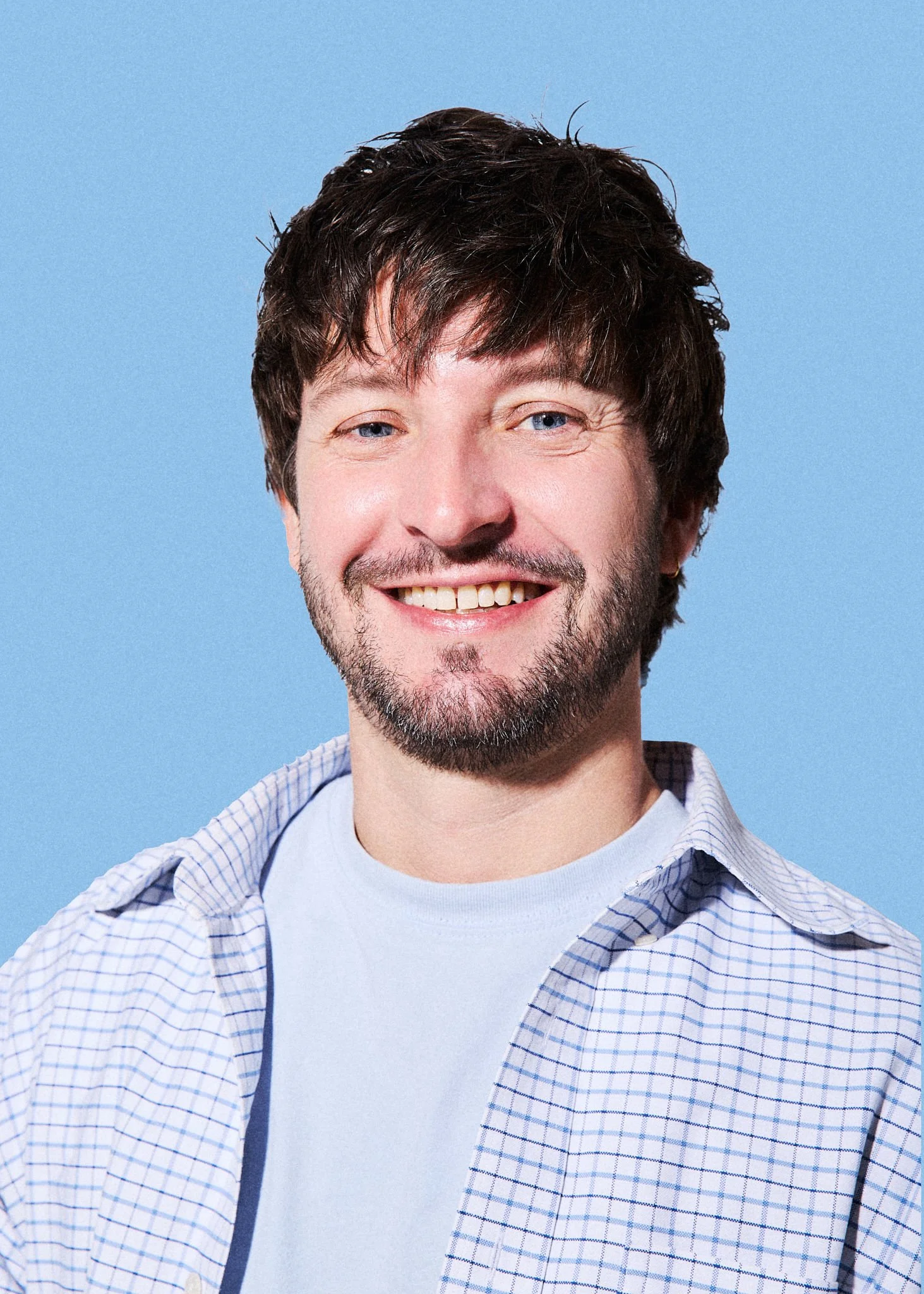
NAte Nash
Therapist
LCSW, MSW
(he/him)

BIO
I am a Licensed Clinical Social Worker (LSCW) with a background in working with queer-identifying populations through varying stages of development. I approach therapy with positivity, intention, and a collaborative mindset. My skills are evidence-based, rooted in 3rd wave cognitive behavioral therapies, and tailored through an anti-oppressive lens. I use these modalities as frameworks to address whatever you bring to our sessions. Rather than applying rigid techniques, I use these frameworks flexibly to meet you where you are.
I aim to create a therapeutic space that is affirming, nonjudgmental, and grounded in trust, where you can show up fully and be met with both validation and honesty. Together, we’ll explore patterns, build psychological flexibility, and develop tools that help you move toward a life aligned with your values.
As a queer-affirming therapist, my drive is to empower clients to claim their identity and amplify their voices. At the core of my work is the belief that you are the expert on your own life. My role is to help you access that clarity, strengthen your voice, and take steps toward living more authentically and aligned. Therapy with me is not about fixing you—it’s about helping you build a deeper relationship with yourself.
My goal is to help you strengthen your voice, deepen your self-understanding, and move through the world with greater clarity and intention. Areas of focus include but are not limited to: anxiety/depression, gender identity, LGBTQ+, self esteem/worth, relationships, life transitions, and building psychological flexibility (ACT-based work).
Want to know more? Here's my LinkedIn.
Interview
Was there a specific person who helped you step into your identity?
My cousin. I spent time with her in Georgia when I was younger, and she was the first person who truly saw me. She held me with complete love and acceptance and empowered me to stand in my truth long before I knew how to do that for myself. She advocated for me in so many spaces, and I don't know how I would have navigated some of those experiences without her. I'm so thankful for her, because at that point in my life, one person was enough to give me a sense of safety and to help me believe that what I was experiencing was temporary. She helped me believe that there would be other experiences waiting for me beyond the ones I was having at the time.
What's the power of being that one person for someone else in your work with queer youth?
I think about that all the time. There were things I had to navigate, experiences I had to survive, and traumatic events that I didn't fully understand while they were happening. Now, fourteen years into a career working alongside queer adolescents as they move into adulthood, it feels like the greatest honor of my life. It's such a blessing to be able to show up for someone in a way that I would have loved to have had at that age. Being able to take what I experienced and transform it into something positive feels meaningful. It makes everything I've lived through feel like it mattered.
You've spent a lot of time working with men in therapy. What have those experiences taught you about masculinity, vulnerability, and emotional expression?
At this point, most of my caseload is made up of cisgender men, with maybe one or two clients who have started exploring aspects of queerness. A lot of my work has become modeling vulnerability, sensitivity, and emotional awareness. So many men have been taught that those qualities aren't available to them. That vulnerability isn't masculine. That expressing emotions somehow makes them weaker.
I try to challenge that narrative whenever it comes up. If a client cries in session and immediately apologizes for it, or expresses shame around it, I often reframe it. What I see isn't weakness, but someone who is connected to themselves. Someone who is brave enough to let their walls come down and is attuned to their emotions. I think men deserve spaces where they can be sensitive, emotional, and human without those things being viewed as flaws.
How do you hold space for clients who are struggling to understand or affirm trans experiences?
I slow down and I listen. I try to return to a place of curiosity. Most of all, I try to understand what is happening underneath whatever they're bringing into the room. My responsibility is to create a space that remains affirming while also helping someone explore their beliefs, fears, or confusion with honesty. I want clients to feel respected and everyone involved to be approached with care. That means moving with grace and not rushing the process. It means staying connected to humanity first.
Are there stories, books, or media that shaped how you understand people and the work you do?
I grew up in a conservative Baptist environment where media consumption was heavily restricted, and I spent a lot of time at the public library. Honestly, I will go to bat for public libraries and librarians for the rest of my life. The library was a saving grace for me. It gave me access to stories, ideas, and experiences that existed outside of the world I had grown up in. It kept me from falling into a really unhealthy place as I was trying to reconcile my identity with the religious beliefs I had inherited. I was able to learn about people who weren't white, Christian, and conservative through books, television, and media. That exposure changed everything.
One thing I try to bring into therapy is humor. Humor is deeply important to me, both personally and professionally. When I'm laughing with people I care about, I can feel myself becoming more grounded. There's trust and safety in laughter. Humor can communicate things that sometimes words can't. I think it's a form of medicine that's often underutilized. That doesn't mean we laugh our way around pain, but there are moments where humor allows us to access something important. Sometimes healing isn't just about processing grief. Sometimes it's also about remembering how to laugh.
Sufjan Stevens is probably my favorite artist of all time. His music has accompanied me through so many different seasons of my life. What's interesting is that before he publicly came out, a lot of people already felt there was something deeply queer in his work. There was always this relationship between spirituality, Christianity, longing, grief, and identity that felt incredibly layered.
The way he writes has always resonated with me. Not because he gives answers, but because he allows complexity to exist. He allows contradiction to exist. You can love your faith and be hurt by it, be deeply spiritual and still have questions, belong and not belong at the same time. His music makes room for all of that.
What is your universal piece of advice?
It always comes back to authenticity. There's a line from Buffy the Vampire Slayer that has always stayed with me: the hardest thing in this world is to live in it. I think about that often, especially as a queer person working with people whose identities are constantly being questioned, challenged, or diminished. There are so many forces that tell us we should be smaller, quieter, less visible, less ourselves. And yet we continue to show up, to exist, to build lives, and love. I think that's incredibly powerful. Sometimes I remind people that simply being here is enough. You don't have to prove your worth or justify your existence. You are already doing something brave by being here.