
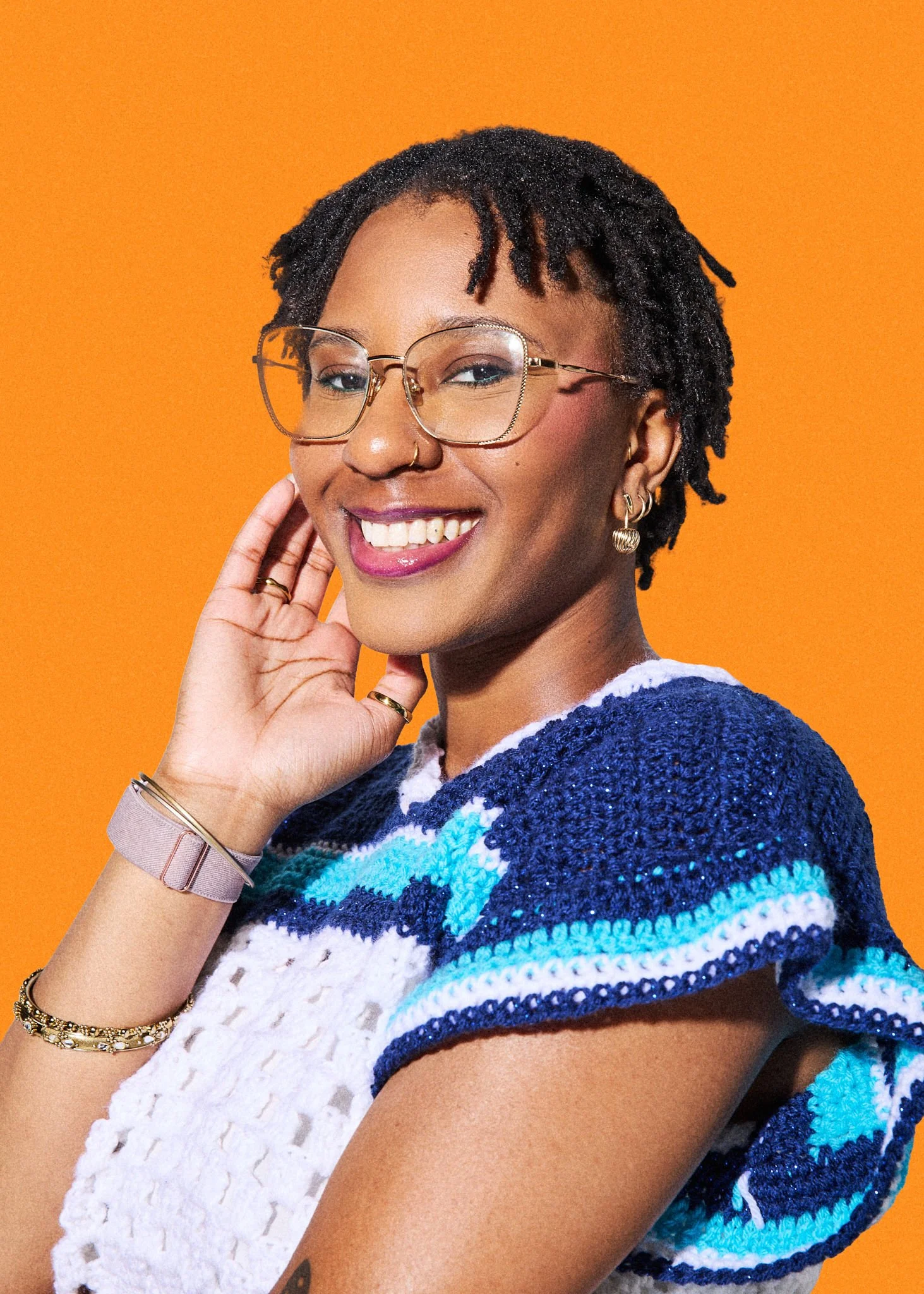
TaNica Holmes
Therapist
(she/her)
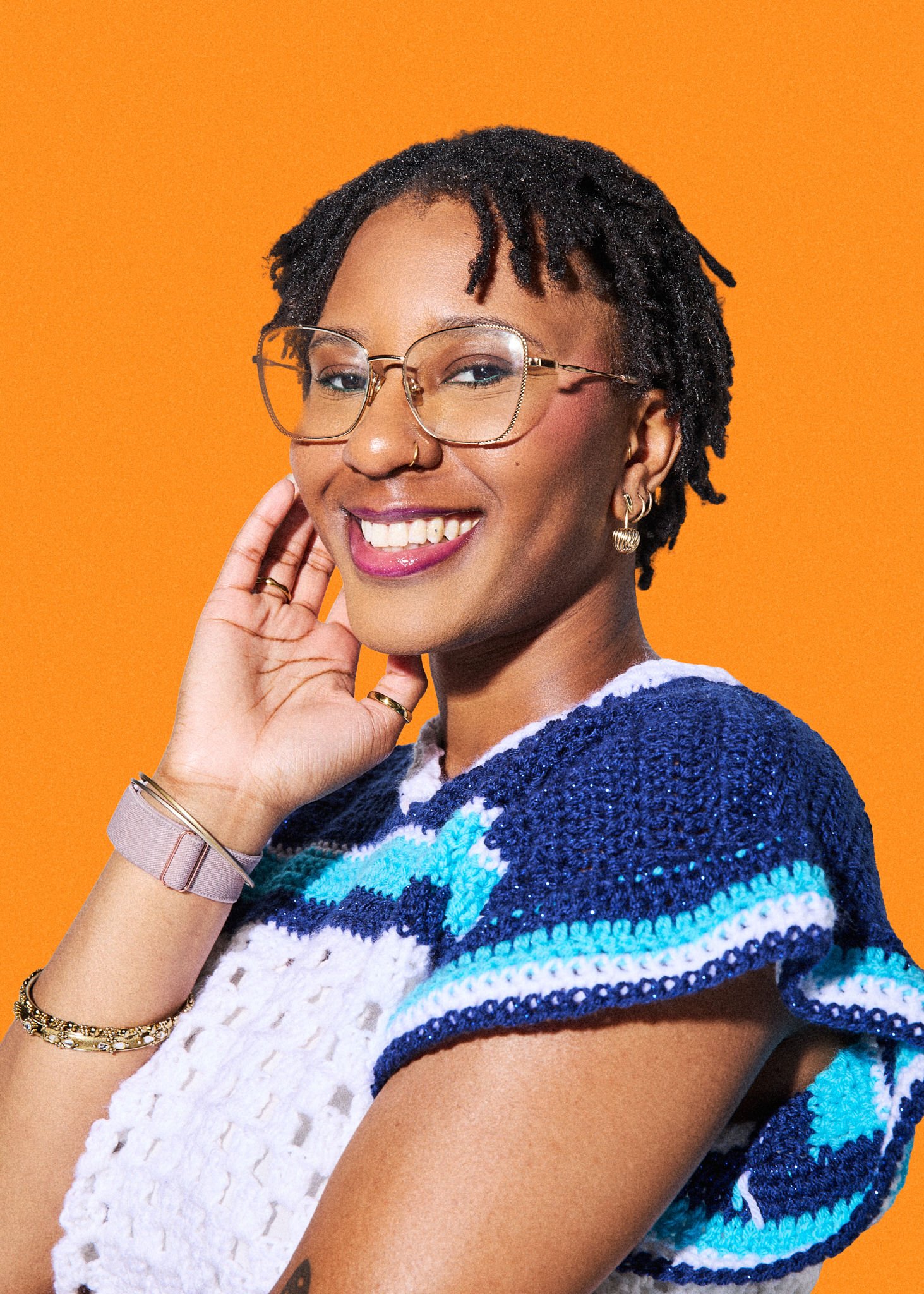
I am a licensed professional counselor (LPC) and a provisional art therapist (ATR-P). My work is grounded in person-centered, trauma-informed, relational and strengths-based approaches. When working with clients, I see them as individuals with a story and worth that has always been there. My role isn’t to replace who my clients are, but to walk alongside them to build strengths and new tools. We will work together to process and develop skills, but we will also laugh, connect, and create meaningful moments along the way.
In my clinical work, I do not shrink or minimize myself, I show up as my authentic self. I grew up heavily watching Black sitcoms and movies, sometimes I often bring those quotes into my sessions to make clients’ experiences feel more validated. I understand what it feels like to be in spaces where you often have to navigate holding it all together, even when things feel heavy underneath. Also, as a lesbian woman, I know how it feels to navigate visibility and safety in different spaces. I hold that awareness with care when working with my clients who are exploring their own queerness or those who have not always been able to be seen or accepted. My family had a strong impact towards my decision to become a clinician, and I bring those aspects into my sessions to further highlight how community can be a huge factor to healing.
I love the work I do and being able to work with clients through any stages of their life. I love working with kids, adolescents, and young adults. I meet clients across a range of experiences including anxiety, neurodivergence, LGBT+ related concerns, postpartum depression, emotional regulation challenges, and life transitions. I aim to meet each client where they are, without rushing the process.
I approach my sessions with authenticity, respect, and transparency. I am often told I have a calming spirit. When clients work with me they would notice warmth and realness. I sit with my clients through the hard moments and I acknowledge with them that I am not here to fix them or rush them to meet their goals. I listen deeply with clients, ask questions to help with reflection, and gently challenge when it is supportive. I also love to bring in my humor into sessions when appropriate. I intentionally minimize power dynamics in therapy, by reviewing my relationship with clients as a partnership where we collectively make decisions together.
Want to know more? Here's my LinkedIn.
Interview Bio with tanica holmes
What would you say to someone who feels intimidated by making art or trying something creative?
Creativity gives us so much more than people realize. As an art therapist, I see a lot of clients come in resistant to making art because of perfectionism. They think they have to be good at it, or that it has to look a certain way. But we've narrowed our definition of what art and crafting actually are.
Walking through the world and taking up space is a form of crafting. The way you speak is a craft. The way you laugh is a craft. The way you move through your relationships is a craft. Art doesn't have to be something tangible that hangs on a wall. Making snow angels as a kid is a craft, because your body and imagination created something.
Crafting doesn't have to result in a finished product. It can simply be the act of creating. That's what I want therapy to be. A place where people can be open, explore, run free.
A palace of openness where people get to be themselves.
How do you cultivate curiosity and playfulness in the therapy room?
I give people permission to be kids. We can make slime, paint, or play. Some of my clients completely light up when they're given permission to explore. This is where the expressive arts do their work. Creating something with your hands can settle the nervous system and reach places talk alone doesn't. I don't want people worrying about whether they're allowed to take up space. I've done therapy in libraries, churches, and outside. We've used bubbles and chalk and gotten creative. I want people's inner child to have room to breathe.
How do you know when someone's inner child isn't showing up?
Usually there's rigidity, a sense that they're trying very hard to be grown up. A resistance to play, imagination, or stepping outside of what they think they're supposed to be. Sometimes it shows up as perfectionism or fear. Other times it looks like performing adulthood. But you can feel it when someone is disconnected from that playful part of themselves.
When you look at the Black community today, what fills you with joy? And what do you feel we're missing?
We are so expressive and creative. We are the blueprint.
I enjoy seeing us hype each other up in spaces. I love seeing us doing the things we love, not letting age stop us from moving forward.
What I think we're missing is community and that village feeling. We've become so individualistic. We don't wanna support each other. We've lost some of that collective care, and honestly, I think we're missing love.
Is that sense of missing community what inspired you to create Hobby Homegirls?
Exactly. Dana, my co-founder, and I really wanted a space where people could gather and make things, so we created a group called Hobby Homegirls. We wanted a reason to pause when life moves too fast. Somewhere people could finally work on the creative projects they'd been putting off, or explore a hobby they'd always been curious about.
A space where people could craft, connect, and build community at the same time. It comes from the same place my clinical work does. Creative and expressive arts aren't separate from healing. Making something is how a lot of us regulate, process, and come back to ourselves.
What does loving yourself look like right now?
Part of self-love right now is intentionally finding my way back.
Running has become a huge part of that. I love running. And not in a (laughs) "running away from something" kind of way. I genuinely love it. Just me, the city, my footsteps, and my breath. There's something really peaceful about running through Chicago and listening to myself move. Dancing around my house feels like self-love too.
Learning to cook for myself feels like self-love. Cooking is such an art form. Feeding myself feels like an act of care.
I've also learned to appreciate my own weirdness, and that took a long time. Underneath all of it is being willing to be yourself, even when it's uncomfortable.
Do you ever see parallels between running and the therapeutic process?
Absolutely. A lot of clients want to be the fastest. They want to heal the fastest, get to the finish line immediately. But healing is a lot like training for a race. Some days you're moving quickly, some days slowly, some days you don't want to run at all. Some days you're tired, out of breath, some days you don't even want to come to therapy. But the goal isn't speed.
The most important thing is simply continuing.
What is your universal piece of advice?
Find laughter in the midst of the craziest moments.
Want to know more? Here's my LinkedIn.