
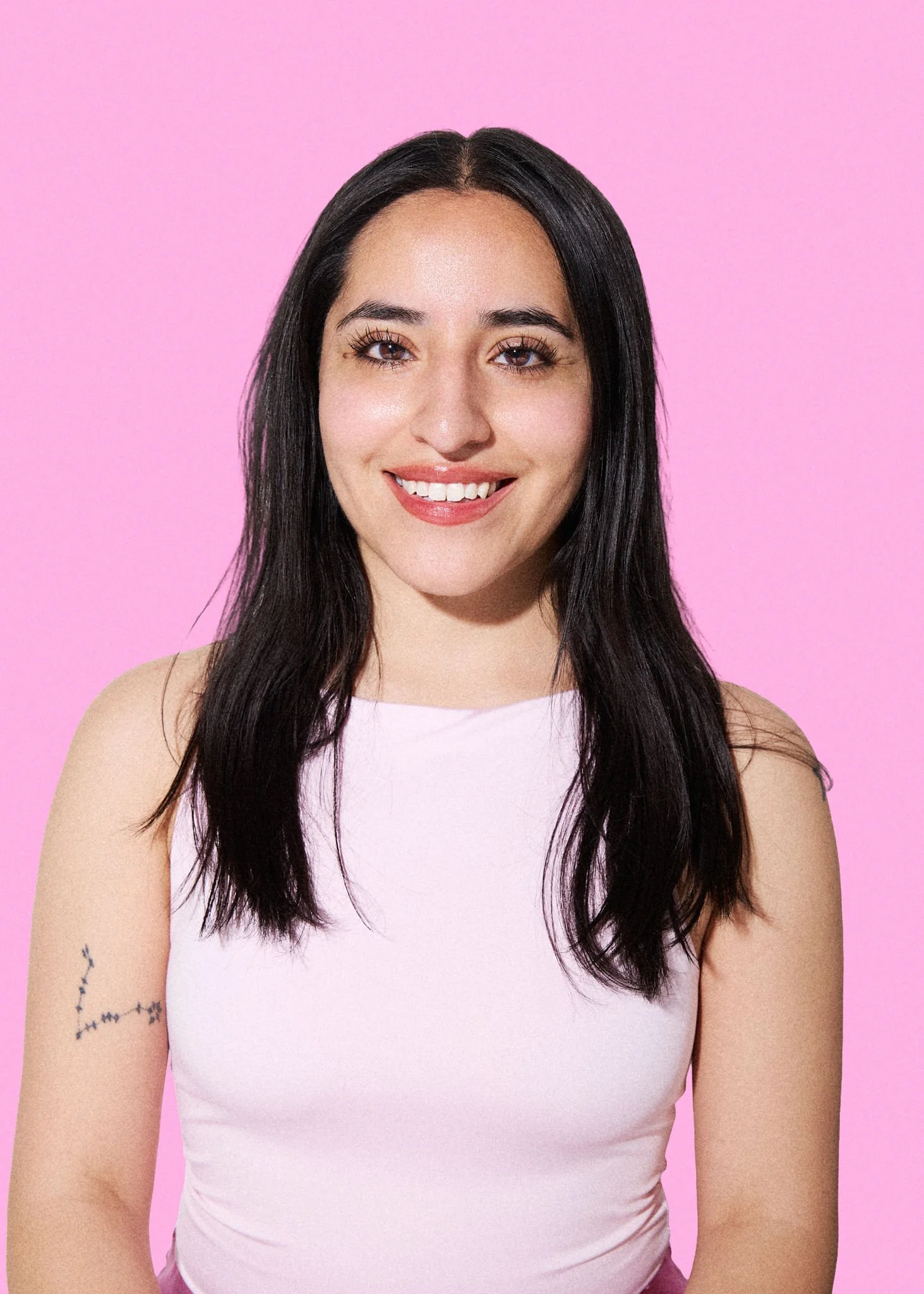
Varinia Peralta
Therapist
LSW
(she/her)
BIO
I’m a pre-licensed therapist working under clinical supervision, and I approach therapy as a collaborative, relational, and deeply human process. My work is grounded in trauma-informed care, Cognitive Behavioral Therapy (CBT), and a strong integration of liberation psychology and feminist frameworks. I believe that healing doesn’t happen in isolation, it’s shaped by our environments, identities, relationships, and the systems we navigate daily. Because of this, I aim to create a space where clients feel both emotionally safe and socially understood.
My identity and lived experience as a woman of color, queer person, and first-generation individual have deeply shaped how I show up in the therapy room. I understand what it means to navigate multiple worlds, hold complex family and cultural expectations, and carry both resilience and unspoken burdens. These experiences allow me to connect with clients in a way that feels authentic, culturally responsive, and grounded in empathy rather than assumption.
I feel especially connected to working with young adults and individuals navigating anxiety, depression, identity exploration, grief, and life transitions. I’m particularly passionate about supporting people who feel “in between,” whether that’s between cultures, roles, expectations, or versions of themselves. I also enjoy working with clients unpacking family dynamics, intergenerational patterns, and the impact of trauma on their sense of self. I also work with neurodivergent folks, including individuals with ADHD, and support them in understanding how their minds work while building tools that align with their strengths.
In the therapy space, I bring warmth, curiosity, and honesty. I’m not a blank slate therapist. I show up as a real person who is engaged, thoughtful, and present with you. Clients often describe feeling seen, understood, and gently challenged in our work together. I value creating an environment where you can be fully yourself, without judgment, while also supporting you in building insight, coping skills, and a deeper sense of self-compassion.
At the core of my work is the belief that you are not broken, you are responding to your experiences in ways that make sense. Together, we can explore those patterns, honor your story, and create space for healing, growth, and change.
Want to know more? Here's my LinkedIn + TikTok.
Interview
What was it like growing up in Iowa as an Ecuadorian kid?
Growing up, I was often one of the only Latino kids in the room. When you're the only one, you become very aware of your differences. Looking back, a lot of my childhood involved navigating the tension between cultural pride and assimilation. I wanted to honor where I came from while also wanting to fit in with my peers. The biggest consequence was probably disconnection from myself. Assimilation often asks people to minimize the parts of themselves that feel "different" in order to feel accepted. The irony is that none of it actually made me feel more secure. It just made me more exhausted.
As I've gotten older, I've realized that identity isn't something you discover once. It's something you continually negotiate and redefine. Finding BIPOC and LGBTQ+ communities in college gave me the opportunity to explore parts of myself that hadn't always felt welcome. One of the greatest gifts of adulthood has been the ability to choose environments that allow me to show up more authentically. A lot of my healing has involved asking, "Who am I when I'm not trying to make other people comfortable?"
That's a much harder question than people realize.
How do you support clients who are wrestling with control, uncertainty, identity, or a sense of hopelessness about the future?
The first thing I do is validate it.
The more aware you become, the more painful certain realities can feel. Greater insight often means greater awareness of injustice, grief, complexity, and uncertainty. That's heavy.
At the same time, uncertainty isn't just frightening. It's also a possibility. None of us know exactly what's coming next, and while that's uncomfortable, it's also where growth, joy, and transformation live. My goal is to help people build enough trust in themselves that they can navigate uncertainty without being consumed by it.
What therapeutic approaches feel most aligned with who you are and how you see the world?
Liberation Psychology is probably the framework that resonates with me most.
What I appreciate about Liberation Psychology is that it asks us to look beyond the individual and consider the broader systems shaping a person's experience. Mental health does not exist in a vacuum. Culture, oppression, community, economics, identity, and history all influence how we move through the world.
When you think about healing, what actually helps people heal?
Connection.
I think Western psychology sometimes places too much emphasis on individual healing and not enough on collective healing. Humans are relational beings. We regulate with one another, learn from one another, and heal alongside one another.
Across cultures, some of the most enduring healing practices involve community. Storytelling, music, ritual, celebration, grief, and gathering. There is something profoundly healing about being witnessed by another person and realizing you don't have to carry everything alone.
When you think about somatic work more broadly, what draws you to it?
I also love somatic approaches because they challenge the idea that healing is purely cognitive. Sometimes insight alone isn't enough. The body has its own wisdom, and I think healing becomes more sustainable when we learn how to listen to it.
At its core, somatic work is about presence. It's about paying attention. It's about building a relationship with yourself.
What I love is that it creates space to explore the many different ways people have practiced healing across cultures. Some people don't resonate with traditional meditation, and that's okay. There are so many ways to be mindful and present. Prayer can be a practice. Community can be a practice. Conversation can be a practice. Movement can be a practice. Dance can be a practice. A lot of those approaches fall outside of Western frameworks, but they're still deeply healing. I think somatic work invites people to ask, "What is my practice? What actually works for me?"
What is your universal piece of advice?
It is Love. Like Bad Bunny says, you have to love more than you do anything else. When I think about legacy, I think less about accomplishments and more about relationships. When my time comes to an end, what will people remember?
Will they remember that I was kind? Will they remember that I was safe? Will they remember that I supported them? More than being Ecuadorian, an immigrant, queer, or any label.
If people remember me as someone who loved well, then that's enough. That's the legacy I want to leave behind.